Since Invisalign was approved by the FDA in the late 1990s, it has become one of the most popular alternatives to traditional metal or ceramic braces. This is a system of clear aligners that are customized to your teeth that gently shift them into their appropriate positions. You will be required to wear them for at least 22 hours a day.
One of the most common reasons that people use these clear aligners is to correct an overbite. In fact, this dental condition is quite common, affecting up to 70% of the population. On the other hand, only about 5 to 10% of the population has an underbite. However, Invisalign clear aligners can be used to correct either.
Some of the most common reasons that people seek treatment for their overbite include appearance or because it's causing discomfort for their teeth, gums, or tongue.
According to orthodontic and dental experts, Invisalign clear aligners can be used to fix mild to moderate overbites. The time varies based on the severity of the condition, as well as compliance with wearing the aligners. If you have a severe overbite, your dentist or orthodontist may recommend traditional braces as a better option for you.
If you have an overbite and are interested in seeking treatment with Invisalign, schedule your consultation today with Dr. Jeremy Kurtz at Invisalign Toronto. We have two locations in the Toronto area, and we are open Monday through Friday to help you with your dental needs.
Below, we'll explain why you should fix your overbite and compare Invisalign versus traditional braces for fixing an overbite. This should help you choose the option that best fits you and your situation.
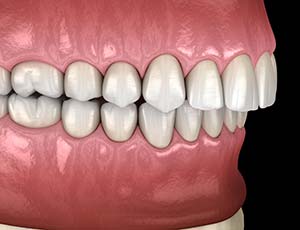
An overbite is a malocclusion where the upper jaw overlaps the bottom. There are two common types:
If you have an overbite, there are several reasons you may want to fix it. There are several reasons you may have an overbite: your teeth may have naturally grown that way or maybe you sucked your thumb or a pacifier for far too long. No matter what caused it, as you've gotten older, you may have started having some issues.
These issues include:
If you have an overbite, it's important to have it fixed to avoid future damage to your teeth and gums or jaw pain. In addition, fixing your overbite may improve your facial structure, solve speech impediments you may have, and improve your overall confidence.
Invisalign can be used to fix mild to moderate dental overbites. If you have a severe skeletal overbite, you may need to have surgery to reposition your jaw.

If you have an overbite and want to correct it, you'll have two primary options: traditional braces or Invisalign. Trying to decide between the two can be difficult because they each have advantages and disadvantages. Some of the primary differences between the two relate to cost, appearance, and treatment speed.
Of course, the factor that has the most influence on the best option is the severity of your overbite and whether you have other dental issues as well. Below, we'll examine some of the key factors to choosing between traditional braces versus Invisalign clear aligners to fix your overbite.
When it comes to how long you'll need to wear braces or aligners, there is no standard- it will depend on the severity of your condition and what the dentist thinks would be best for you.
On average, Invisalign takes 6 months to 2 years and traditional braces take approximately 1 to 3 years. It's important to note that when it comes to aligners, your compliance with the treatment has a major impact on how long your treatment takes.
Typically, Invisalign requires a shorter span of time for treatment- but they are not as effective with severe overbite conditions. If this is your case, the dentist may recommend that you stick with traditional braces.
When it comes to aesthetics, Invisalign clear aligners are usually the better option because they are nearly transparent. This is why so many adults lean toward them over traditional metal braces.
On the other hand, if Invisalign is not recommended for you, check with the dentist about ceramic braces or lingual braces, both of which are less visible than metal ones.
Children often like metal braces because they can choose the colors of their brackets and bands.
For many people, the cost of treatment is a factor. At Invisalign Toronto, our packages start at $2,900 and includes all of your aligners, a retainer to be worn after treatment has been completed, supervised treatment, and a consultation to determine the best option for you.
Some patients find the responsibilities that come with Invisalign to be inconvenient. You will need to take them off when you eat because they can be easily stained. This actually helps with your oral hygiene because you don't have to work around the brackets and wires. Plus, you can continue to enjoy your favorite foods such as popcorn, nuts, and candies.
However, if you can't remember to put them back in when you're done eating or brushing and flossing, Invisalign may not be the best option for you. In order for them to fix your overbite, you must wear them as directed and take proper care of them.
Overbite is very common, so it's not something you should feel bad about if you have it- but it can cause issues later on, so it's a good idea to address it as soon as possible.
If you are in or near Toronto and have an overbite, schedule your consultation with Dr. Jeremy Kurtz at Invisalign Toronto today. Dr. Kurtz has treated more than 3,000 patients with Invisalign. He is a VIP Diamond and Top 1% Provider for Invisalign. Our office hours are Monday through Thursday, 9:00 AM to 6:00 PM and Friday 9:00 AM to 2:00 PM. We have two convenient locations to serve you: Front Street and Lawrence Avenue.